Alentejo Explained: Which Part of Alentejo Is Right for You? A Guide to the Regions
Alentejo is one of the most talked-about destinations for international buyers and expats considering a move to Portugal, but it is also one of the least understood. Many people arrive knowing only that it is "somewhere south of Lisbon" with good wine and whitewashed villages. The reality is far richer, and far more varied, than that.
And today I wanted to take the time to explain the four main Alentejo regions, what makes each one different, and which type of buyer or mover tends to thrive in each and if you are trying to work out which part of Alentejo is right for you, then this is the place to start.
Contents:
Alto Alentejo: The Hills and the History
Alentejo Central: The Heart of the Region
Baixo Alentejo: The Deep South
Alentejo Litoral: The Atlantic Coast
Why We Moved to Alentejo
Before we get into the regions, I wanted to give context and share why and how we came to be here in Alentejo at all, because it shapes everything I write and every recommendation I make.
My partner Sofia, who is Portuguese, and I did not choose Alentejo. It chose us. It was not the result of a spreadsheet comparing regions, proximity to airports, or price per square metre. It was something that happened quietly, on a drive through cork trees and golden plains, somewhere between Évora and nowhere in particular.
I had visited other parts of Portugal before. The Algarve is beautiful, no question. Lisbon is electric. Porto has a rawness that gets under your skin. But Alentejo did something different. It felt familiar in a way I could not immediately explain.
Part of it is the pace. There is a slowness here that is not laziness; it is something more intentional. Life has a rhythm, and once you find it, you stop fighting the clock. The mornings are long and unhurried. Lunch matters. The afternoon light turns everything amber and you start to understand why people have been painting this landscape for centuries.
Part of it is the weather: long, warm summers, mild winters, more days of sunshine than almost anywhere in Western Europe.
But the part that surprised us most was a sense of possibility we had not felt anywhere else. Coming from London, you know what it means to be outpaced by a city: the feeling that it is moving faster than you, expanding beyond what you can keep up with. In Alentejo, you can grow with a place rather than being outgrown by it.
There is something else, more personal. Perhaps this pull is in the blood. My grandfather grew up in rural Kenya, moved to the city, eventually made it to London, and then did something quietly remarkable: he bought a farm back in the Kenyan countryside. My dad always talked about doing the same. He moved our family from the city to the Kent coast when we were young, always drawn towards a slower, more grounded way of life. Some of my earliest memories are of visiting my grandfather on that farm: long drives to the market, the names of his cattle, the smell of the earth after rain. When I first drove through the Alentejo, something stirred.
Perhaps that is saudade for a life I never quite had, but always recognised.
Our goal is to explore more, experience more, and live a slower, more meaningful life. Alentejo makes that possible.
What Is Alentejo? A Quick Overview
Alentejo is a large region in southern Portugal. The name means beyond the Tagus, referring to the great river that divides the north and centre of the country from this vast southern interior.
Key facts about Alentejo:
Covers roughly one third of Portugal's total landmass
Home to only around 3% of the country's population
Divided into four main sub-regions: Alto Alentejo, Alentejo Central, Baixo Alentejo, and Alentejo Litoral
Known for cork oak forests, wheat plains, whitewashed villages, wine, and one of Europe's longest unspoilt Atlantic coastlines
Generally more affordable than the Algarve, Lisbon, or the Silver Coast
Most people picture rolling wheat plains and whitewashed villages when they think of Alentejo. That picture is accurate, but it is only part of the story. Each sub-region has a distinct landscape, character, and property market.
Alentejo Regions Explained
Alto Alentejo: The Hills and the History
Where is it? The northernmost sub-region, bordering Spain to the east and the Alentejo Central to the south.
Alto Alentejo is where the landscape becomes more varied than the classic Alentejo image suggests. Rather than flat open plains, you find gently rolling hills, granite outcrops, and river valleys. The terrain feels more rugged and the towns feel older, more fortified, more rooted in history.
This is castle country. The hilltop towns of Marvão, Castelo de Vide, and Portalegre sit on the border with Spain, with views that stretch across two countries. Elvas, a UNESCO World Heritage Site, contains one of the most impressive sets of military fortifications in Europe. These are not mere tourist attractions; they are the bones of communities that still live around them.
Who suits Alto Alentejo? Buyers who want space, strong historical character, and genuine rural value. Property here can be extraordinary: historic village houses, farmhouses with land, and rural quintas at prices that feel almost impossible compared to the Algarve or Lisbon. It is a quieter corner of an already quiet region, and the people who choose it tend to know exactly what they are looking for.
Alentejo Central: The Heart of the Region
Where is it? The geographical and cultural centre of Alentejo, anchored by the city of Évora.
Évora sits at the heart of this sub-region like a full stop on a very long sentence. A UNESCO World Heritage city, it is arguably the most complete historic city in Portugal: a Roman temple in the middle of town, an intact medieval city wall, a cathedral that has stood for eight centuries. And yet it functions as a real, working city, not a museum. University students fill the cafés. Markets happen on Saturdays. Life goes on.
The landscape around Évora is the Alentejo of the imagination: vast plains called the planície, carpeted in wheat, sunflowers, or wildflowers depending on the season. Cork oaks and olive trees punctuate the horizon. Villages appear suddenly and disappear just as quickly, their white walls and blue-painted borders marking them out against the ochre earth.
Who suits Alentejo Central? Buyers who want the best balance of town and countryside. Évora provides culture, restaurants, healthcare, and road connections to Lisbon in under an hour and a half, while villages 20 or 30 minutes away offer complete rural solitude. This is also the heart of Alentejo's celebrated wine country. If you want to be close to the soul of the region without sacrificing urban infrastructure entirely, this is where most international buyers land.
Baixo Alentejo: The Deep South
Where is it? The southernmost interior sub-region, stretching from below Évora to the Algarve border.
As you move south from Évora, the landscape shifts. Baixo Alentejo is wilder and, in places, more austere. The plains continue, but the towns (Beja, Serpa, Moura, Mértola) have a different character. Moorish influence is more visible here: in the architecture, in the food, in the street layout of older towns. The Castro Verde plains are one of Europe's last great steppe ecosystems, home to rare birds and a landscape of almost cinematic emptiness.
Mértola deserves particular mention. A small town perched above the River Guadiana, it once served as a Roman port and later became a significant Moorish settlement. It remains one of the most beautifully preserved historic towns in Portugal, almost entirely unknown outside the country.
Who suits Baixo Alentejo? Those looking for the most off-the-beaten-track Alentejo experience and some of the most affordable property in all of Portugal. Baixo Alentejo rewards patience and curiosity. It is not for buyers who need convenience on their doorstep, but for those who find freedom in remoteness, it offers something most of Europe has already lost.
Alentejo Litoral: The Atlantic Coast
Where is it? The western coastal strip, running from Setúbal in the north down to the Algarve border.
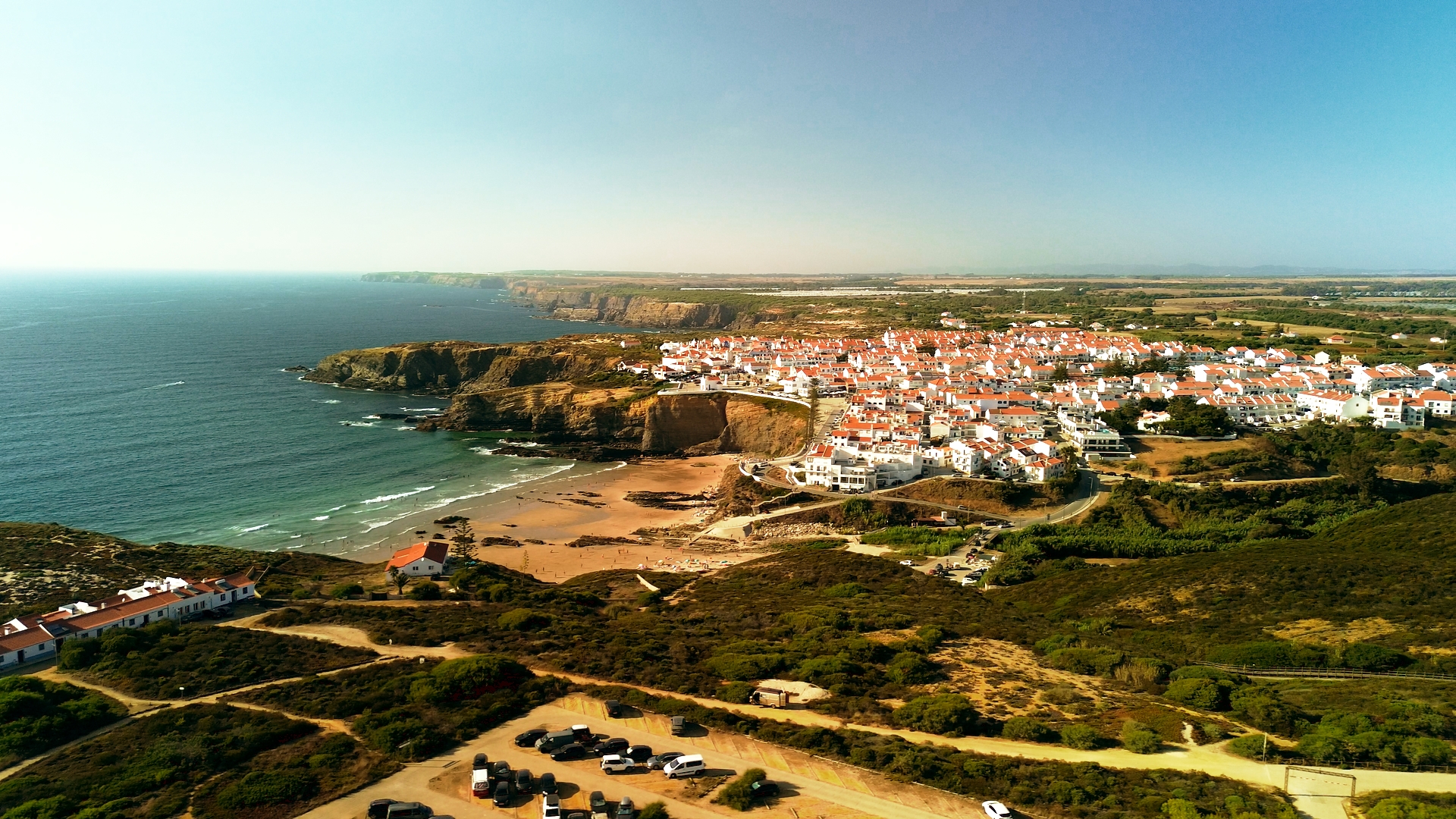
The Alentejo Litoral is a different world from the interior. This is Alentejo's coastline, and it is unlike any other coast in Portugal. Much of it falls within the Parque Natural do Sudoeste Alentejano e Costa Vicentina, one of the most protected stretches of coastline in Europe, which is precisely why it has remained so extraordinary.
The beaches are long and largely empty, backed by dunes and pinewoods rather than hotels and beach clubs. The water is cooler than the Algarve and the wind is stronger, but the atmosphere is more elemental and the landscape more dramatic. Villages like Vila Nova de Milfontes, Zambujeira do Mar, and Odeceixe have maintained their character because development has been kept firmly in check.
Comporta, in the north of the Litoral, has attracted considerable attention in recent years: a former rice-growing delta that drew artists, architects, and a quieter kind of buyer. Land prices there have risen sharply. The southern Costa Vicentina coast remains considerably more accessible.
Who suits Alentejo Litoral? Buyers who want the Atlantic without the Algarve crowds. Those for whom nature, unspoilt coastline, and a quality of life that is genuinely coastal but not overbuilt is the priority. Those for whom a 20-minute drive to a beach with almost no one on it sounds like a reason to move, not an inconvenience.
Which Alentejo Region Is Right for You?
A quick reference guide:
If you want...Consider...
History, hilltop towns, rural value - Alto Alentejo
Town and countryside balance, wine country - Alentejo Central
Remoteness, affordability, Moorish character - Baixo Alentejo
Atlantic coast, nature, unspoilt beaches - Alentejo Litoral
The honest answer is that the right region depends on what you are running towards, not just what you are running from. All four share the same essential quality: the light, the scale, the pace, and the sense that life here has not yet been fully claimed by modernity.
For those who came looking for something quieter, something more rooted, something that might feel, in ways that are difficult to explain, like home, that is everything.
Frequently Asked Questions About Alentejo
Is Alentejo good for expats? Yes. Alentejo has a growing expat community, particularly around Évora, the Litoral coast, and the Alto Alentejo border towns. The cost of living is lower than Lisbon or the Algarve, the pace of life is slower, and the community tends to be welcoming.
Is Alentejo affordable compared to the rest of Portugal? Generally yes, particularly for rural property. The interior sub-regions (Alto, Central, and Baixo Alentejo) offer some of the best value property in Portugal. The Litoral coast, particularly around Comporta, has seen significant price growth and is less affordable than it once was.
What is the best area of Alentejo to live in? It depends entirely on your priorities. Alentejo Central suits those who want a balance of urban amenities and rural life. Alto Alentejo suits those after history and space. Baixo Alentejo suits those seeking remoteness and affordability. The Litoral suits coast and nature lovers.
How far is Alentejo from Lisbon? Évora is approximately 1 hour 20 minutes from Lisbon by car. The Litoral coast anywhere from 1 hour to around 2 hours 30 minutes depending on the destination. The Alto Alentejo border towns are 2 to 3 hours depending on the destination.
Does This Sound Like You?
If you have been looking at Portugal and wondering whether Alentejo might be the part of it that fits, I would love to hear from you. Whether you are at the very beginning of your search or already deep into it, I am here to help you understand the region, find the right area, and make sense of what is available.
And if you are thinking of buying or selling in Alentejo, get in touch. I know this region, I live in it, and I believe in it.